
What Is Schema Markup? A Beginner's Guide to Rich Results and AI Citations
Published on
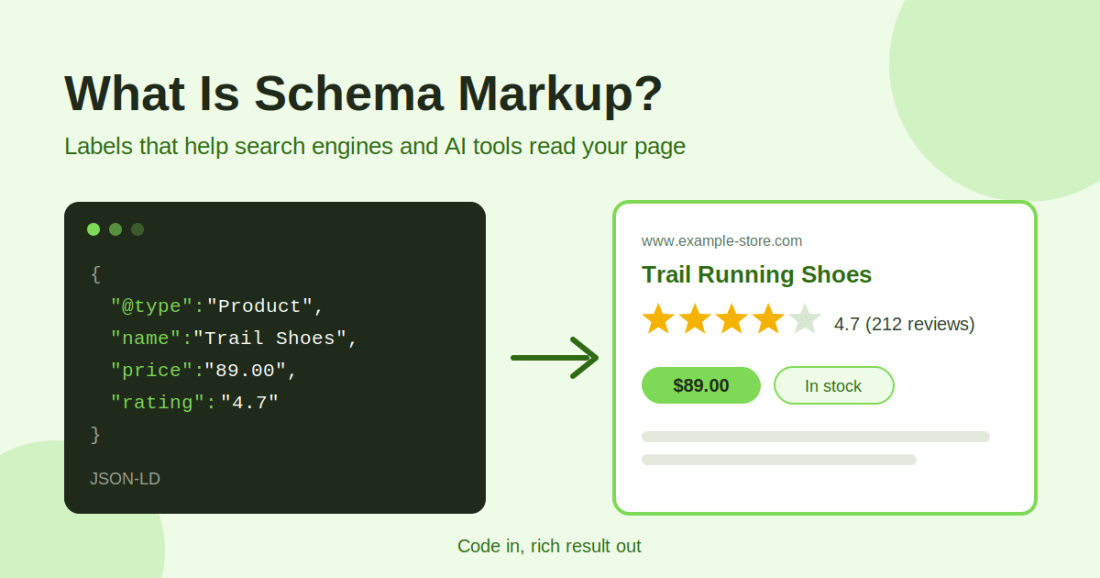
You have probably seen search results with star ratings, prices, FAQ dropdowns, or recipe photos. Those extras do not appear by luck. They come from a small piece of code called schema markup. It tells search engines exactly what your page is about, so they stop guessing.
Today, that code does more than win fancy search listings. AI tools like Google’s AI Overviews and ChatGPT also pull from clear, well-labeled content. This guide explains what schema markup is, how it works, and how to start using it, even if you have never touched code before.
Key Takeaways
- Schema markup is code that labels the content on your page so search engines understand it.
- It can unlock rich results such as stars, FAQs, prices, and event dates.
- Google recommends JSON-LD as the easiest format to use.
- Schema is not a direct ranking factor, but it can raise your click-through rate.
- Clear structured data also helps AI systems find, trust, and cite your content.
- Your markup must match what users can see on the page, or you risk losing rich results.
What Is Schema Markup?
Schema markup is a set of tags you add to a web page. These tags describe the content in a language that search engines can read. A human can look at a page and see that "4.8" is a rating and "$49" is a price. A crawler only sees text. Schema markup removes the doubt.
The vocabulary comes from Schema.org, a project started in 2011 by Google, Microsoft, Yahoo, and Yandex. It lists hundreds of types, such as Article, Product, Recipe, LocalBusiness, and Event. Each type has properties, like name, price, author, or opening hours.
People often use the terms "schema" and "structured data" as if they mean the same thing. They are close, but not identical. Structured data is the general idea of organizing information in a standard way. Schema.org is the shared vocabulary you use to do it.
How Does Schema Markup Work?
Think of your page as a box of items with no labels. Schema markup adds the labels. When a crawler visits your page, it reads the code, matches it to a known type, and stores the details in a cleaner format.
Here is a simple example of a product written in JSON-LD:
<script type="application/ld+json">
{
  "@context": "https://schema.org",
  "@type": "Product",
  "name": "Trail Running Shoes",
  "offers": {
    "@type": "Offer",
    "price": "89.00",
    "priceCurrency": "USD"
  },
  "aggregateRating": {
    "@type": "AggregateRating",
    "ratingValue": "4.7",
    "reviewCount": "212"
  }
}
</script>
This tells a search engine that the page is about a product, what it costs, and how customers rate it. The user does not see this code. It sits quietly in the page and does its job.
Schema Markup Formats Compared
You can write schema in three main formats. They all work, but they are not equally easy to manage.
| Format | Where the Code Lives | Ease of Use | Best For |
|---|---|---|---|
| JSON-LD | One script block in the page | Easy | Most websites, and Google’s preferred choice |
| Microdata | Inside HTML tags | Medium | Older sites with fixed templates |
| RDFa | Inside HTML tags | Harder | Specialized or academic sites |
If you are starting fresh, pick JSON-LD. It keeps the code separate from your design, so you can edit it without breaking your layout.
What Are Rich Results and Why Do They Matter?
Rich results are search listings that show more than a title, a link, and a short description. They can include images, ratings, prices, cooking times, event dates, and expandable answers. Google explains which types it supports in its own structured data documentation.
Here is why they are worth the effort:
- They take up more space on the results page, so they get noticed.
- They give users useful details before the click, which brings in better visitors.
- They build trust, because ratings and prices feel more transparent.
One important point: schema does not guarantee a rich result. Google decides whether to show one. Your job is to make the page eligible and keep the markup accurate.
Does Schema Markup Help You Rank Higher?
Not directly. Google has said that structured data is not a ranking factor on its own. What it does is help the search engine understand your content, and it can improve how your listing looks. A better-looking listing often gets more clicks. More clicks from the right people can support your overall performance.
Publications like Search Engine Journal have covered this topic for years, and the advice stays the same. Treat schema as a tool for clarity and visibility, not as a shortcut to page one.
How Schema Markup Supports AI Citations
AI search tools need to decide which sources to trust and quote. They look for pages that are clear, well organized, and easy to verify. Schema markup helps in three ways.
- It defines your entities. Organization, Person, and Product schema tell machines who you are and what you offer.
- It connects facts. Author, publisher, and date properties show who wrote the content and when.
- It reduces confusion. When your page labels a price, a rating, or an answer, the system does not have to interpret messy text.
No one outside the AI companies can say exactly how each system picks its sources. Be careful with anyone who promises guaranteed citations. What we can say is that clear, accurate, well-labeled pages are easier to process, and that is the best foundation you can build.
This ties closely to trust signals. If you want to understand how authors, sources, and brand reputation shape credibility, read our guide on what E-E-A-T is in SEO and how to build authority. Schema supports those signals by making author and organization details machine-readable.
Common Schema Types and When to Use Them
You do not need every type. Pick the ones that match your page.
| Schema Type | Use It On | Possible Benefit |
|---|---|---|
| Article | Blog posts and news | Clear author and date details |
| Product | Online store pages | Price, stock, and star ratings |
| LocalBusiness | Contact and location pages | Address, hours, and phone details |
| FAQPage | Pages with real question and answer sections | Clear answers for search and AI tools |
| Recipe | Cooking pages | Image, time, and calorie details |
| Organization | Home and about pages | Stronger brand identity |
Keep in mind that Google has limited FAQ rich results to certain types of sites in recent years. Still, the markup remains valid and can help machines read your question and answer content. Always check Google’s current rules before you rely on a feature.
The Schema Markup Lifecycle: From Plan to Maintenance
Schema is not a one-time job. Here is the process most teams follow.
How to Add Schema Markup to Your Website
You have three practical options, depending on your comfort level.
- Use a plugin. If you run WordPress, SEO plugins can add basic Article, Organization, and Breadcrumb schema automatically.
- Use a generator. Free tools let you fill in a form and copy the JSON-LD into your page.
- Write it by hand. This gives you the most control, and it is the best choice for custom page types.
After adding the code, always test it. A missing comma in JSON-LD can break the whole block. Google’s testing tools show you what they can read and flag problems right away.
Real-World Examples of Schema in Action
Here are a few simple cases to show how this works in practice.
- A local bakery: LocalBusiness schema lists the address, hours, and phone number, so searchers can see them without opening the site.
- An online shoe store: Product schema shows the price, availability, and rating right in the search listing.
- A marketing blog: Article schema names the author and publish date, which supports trust and freshness signals.
What We Have Seen Working With Schema
At Bizzbuzz Creations, we have spent more than three years helping businesses with technical SEO, content, and structured data. The same pattern shows up often. Sites that keep their markup accurate and tied to real page content see fewer errors and more consistent rich result eligibility. Sites that copy generic code or mark up content that is not on the page tend to run into warnings and lost features.
Our approach is simple. We map each page to the right type, keep the data consistent across the site, and recheck it after every major update. If you want help with this, you can see our work on the Bizzbuzz Creations website.
Get Your Schema Markup Working for You
Add clean structured data that helps your pages earn rich results, stronger visibility, and a better chance of being cited by AI search tools.
Common Schema Markup Mistakes to Avoid
Most schema problems come from a handful of habits. Watch for these.
| Mistake | Why It Hurts | Better Approach |
|---|---|---|
| Marking up hidden content | Breaks Google’s guidelines | Only mark up what users can see |
| Fake or inflated reviews | Can trigger a manual action | Use real customer reviews only |
| Outdated prices or dates | Creates a mismatch with the page | Update markup when content changes |
| Skipping tests | Small errors go unnoticed | Validate before and after publishing |
| Using the wrong type | Confuses search engines | Match the type to the page purpose |
Where Schema Fits in Your Wider SEO Strategy
Schema works best when it sits on top of strong content, fast pages, and good site structure. It will not fix thin articles or confusing navigation. Sites like Search Engine Land regularly remind readers that structured data is one part of a larger system.
If you are planning your wider approach, our post on digital marketing in 2026 tips, strategies, and services shows how technical SEO, content, and promotion fit together.
Final Thoughts
Schema markup is one of the most practical technical SEO tasks you can learn. It labels your content, helps search engines read it, and gives you a chance at richer listings. It also prepares your pages for a search world where AI tools decide which sources to quote.
Start small. Add Organization schema to your home page, Article schema to your blog posts, and Product or LocalBusiness schema where it fits. Test everything, keep it accurate, and review it often. Over time, those small steps add up to a site that machines and people can both understand.
Frequently Asked Questions
Written by
Mohd Shaquib
Mohd Shaquib is a digital marketing professional specializing in SEO, content marketing, and online brand growth. He focuses on improving website visibility, driving organic traffic, and helping businesses grow through effective digital marketing strategies.