Apr 13, 2026 · Shreya
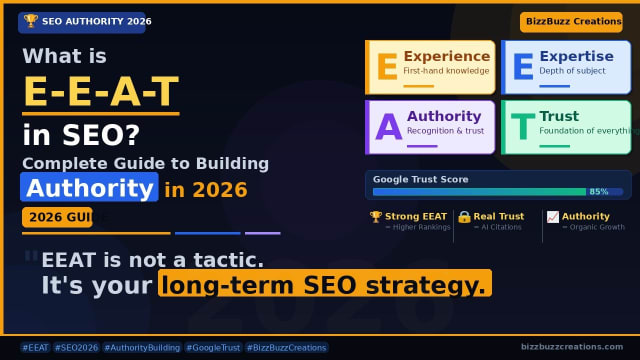
What is E-E-A-T in SEO? Complete Guide to Building Authority in 2026
Introduction: Is Your Website Trusted by Google? If your website traffic is dropping in 2026 — or simply not growing despite consistent effort — the…


If you've ever typed "how long does SEO take" into Google at 11pm, this guide is for you. No shortcuts, no vague promises — just what actually moves a website from invisible to 10,000+ visitors a month, and how long each stage really takes.
Most articles about SEO either overcomplicate it with jargon or oversimplify it into a checklist that doesn't actually work. This one is different. It's built around one question: if you're starting a website today, what do you need to do, in what order, to hit a steady 10,000 organic visitors a month? Below is the honest answer, section by section.
Let's start with expectations, because this is where most people get discouraged and quit too early. SEO is slow at the start and fast later. Here's roughly how it plays out for a new or mostly-empty website.
| Timeframe | What's Happening | Traffic Feel |
|---|---|---|
| Month 1–2 | Fixing technical issues, researching keywords, planning content | Flat, almost nothing |
| Month 3–4 | First pages get indexed and start ranking on page 2–3 | Small, early movement |
| Month 5–6 | Internal linking and E-E-A-T signals start paying off | Noticeable jump |
| Month 7–8 | Backlinks come in, older posts get refreshed and re-ranked | Steady climb |
| Month 9+ | Older pages mature, more pages rank at once | Growth compounds on its own |
Notice the pattern: nothing happens for two months, then it builds. That's normal. Google needs time to crawl, index, and trust a new site. If your traffic is flat in month one, that's not failure — that's the process working as intended.
This is the step everyone wants to skip because it's boring. Don't skip it. A slow, broken, or hard-to-navigate website will hold back even genuinely great content. Before you publish anything, check these:
If you don't want to handle this part yourself, it's worth bringing in help. Professional SEO services usually start exactly here, with a full technical audit, before touching content at all.
A lot of beginners pick keywords purely by search volume. That's a mistake. A keyword with 10,000 monthly searches is worthless to you if the people searching it aren't looking for what you offer. What matters more is intent — what the person actually wants when they type that phrase.
There are four main types of search intent, and each one needs a different kind of page:
| Intent Type | Example Search | Best Page Type |
|---|---|---|
| Informational | "what is technical SEO" | Blog guide |
| Commercial | "best SEO tools 2026" | Comparison article |
| Transactional | "SEO agency for small business" | Service page |
| Navigational | "BizzBuzz Creations reviews" | Brand or about page |
A simple way to check this yourself: type your target keyword into Google and look at what's already ranking. If the top ten results are all blog posts, don't try to rank a product page there. Match the format that's already winning, then make yours more useful.
One of the biggest differences between a site that struggles and one that ranks well is structure. Random, unconnected blog posts rarely build authority. Clusters do.
Here's how it works: pick one broad topic your business is genuinely good at. Write one detailed "pillar" page covering that topic at a high level. Then write 8 to 12 smaller articles, each covering one specific piece of that topic in depth, and link them all back to the pillar page. Over time, Google starts to see your site as a real source on that subject, not just a collection of disconnected posts.
For example, a pillar page on "small business SEO" could link out to cluster articles on local SEO, keyword research, technical audits, and content marketing — each one narrow, each one useful on its own, and all pointing back to the main page. This is exactly the kind of structure that dedicated SEO services are built around, because it's one of the few tactics that reliably works for competitive keywords.
Google's quality guidelines lean heavily on something called E-E-A-T: Experience, Expertise, Authoritativeness, and Trust. In plain terms, this means Google is trying to figure out whether a real, qualified person is behind your content — especially for topics that touch someone's health, money, or major life decisions.
Here's what actually helps with this, in practice:
None of this is a trick to game an algorithm. It's genuinely what makes content more useful to a reader too. That overlap is exactly why it works.
Backlinks — other websites linking to yours — are still one of the strongest ranking signals there is. But this is also the step where people get impatient and buy links, join spammy link networks, or trade links with unrelated sites. Skip all of that. It rarely works long-term, and it can actively hurt you if Google flags it.
The slower but reliable approach is digital PR: create something genuinely worth linking to — original research, a useful tool, real data from your own business — and then pitch it directly to journalists, bloggers, and niche publishers who cover your industry. One well-earned link from a relevant, respected site is worth more than fifty low-quality ones.
A good rule of thumb: if you wouldn't be comfortable explaining exactly how you got a link to Google directly, don't get it that way.
Search has changed. Ranking #1 in the classic blue-link results still matters, but a growing share of searches now get answered directly inside AI-generated summaries, before anyone even clicks a link. To show up there too, structure your content so it's easy to pull answers from:
This doesn't replace good writing. It just means putting the answer near the top instead of burying it under three paragraphs of introduction.
This framework works, but every industry and site is different. If you'd rather have a team handle the technical audit, keyword research, and content strategy for you, get in touch with BizzBuzz Creations to talk through your specific situation, or learn more about how BizzBuzz Creations approaches organic growth.
Suggested for you
Apr 13, 2026 · Shreya
Introduction: Is Your Website Trusted by Google? If your website traffic is dropping in 2026 — or simply not growing despite consistent effort — the…
Oct 13, 2025 · Mohd Ahsan
Table of Contents Google SEO Algorithm Updates: Everything You Need to Know in 2025 In the fast-changing world of digital marketing, one thing…
Sep 17, 2025 · Satyam Gupta
Learn how fresh website backlinks can help your site rank higher, bring more visitors, and grow your online presence fast.