
Key Takeaways
- The problem: reach, impressions and clicks are not leads. A campaign can look healthy in your dashboard and still bring zero enquiries.
- The cause: weak targeting, a landing page that does not match the ad, slow mobile pages, and broken or missing conversion tracking.
- The local twist: Indian audiences often prefer a call or WhatsApp over a form, while UK audiences care more about trust signals and data consent.
- The fix: repair the page and the follow-up process before raising the ad budget, and judge success by cost per qualified lead, not click-through rate.
Spending on ads but not getting enquiries?
BizzBuzz Creations audits your campaigns, fixes the leaks and builds paid marketing that brings in people ready to buy.
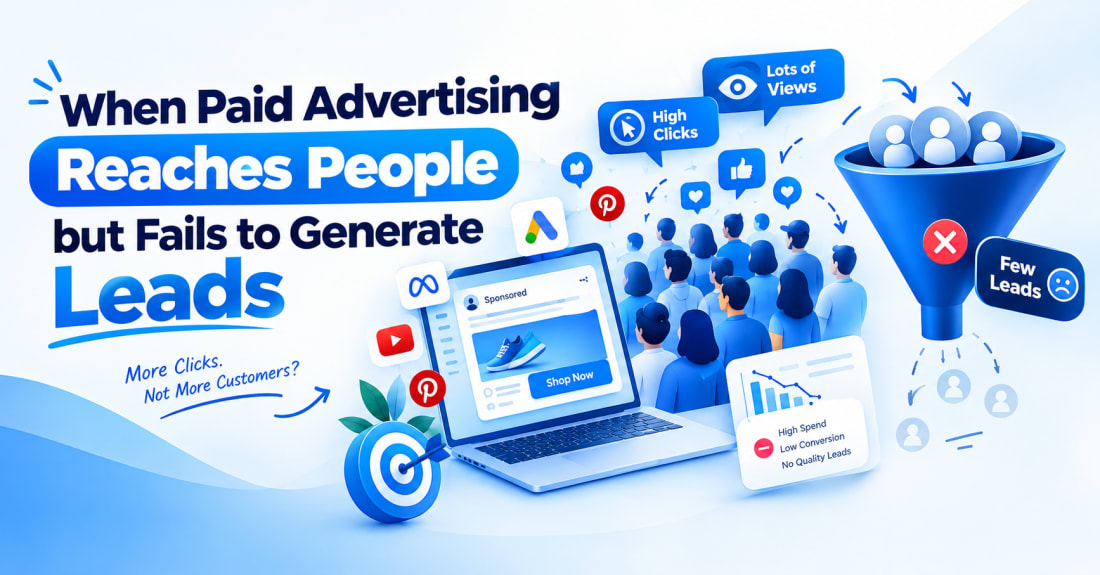
Get a free ad auditPicture this. You open your ad dashboard on Monday morning and the numbers look great: 80,000 impressions, 2,400 clicks, a decent click-through rate. Then you check your inbox and your phone. Three enquiries. Two of them were wrong numbers.
If that sounds familiar, you are not alone. Business owners from Prayagraj to Manchester tell the same story: paid advertising is reaching people, but it is not generating leads. The good news is that this is almost never an "ads don't work" problem. It is a "something between the click and the enquiry is leaking" problem. At BizzBuzz Creations, this is one of the first things we look at when a new client says their campaigns have stopped paying off.
Why Reach Does Not Equal Leads
Platforms like Google and Meta are very good at showing your ad to people. That is what they are paid to do. Whether those people actually want what you sell is a different matter. Under the hood, most search and social campaigns run on a pay-per-click model, so you are charged for attention, not for results. A click is a visit. A lead is a person who raised their hand and said, "I am interested, contact me."
Between those two moments sit your targeting, your message, your landing page, your form, your phone line and your follow-up speed. If any one of them is weak, the whole chain breaks.
The Most Common Reasons Ads Get Clicks but No Leads
1. You are attracting the wrong audience
Broad keywords and wide interest targeting bring in curious browsers, students, job seekers and competitors. Someone searching "digital marketing course" is not the same as someone searching "digital marketing agency for my clinic." If your campaign mixes the two, your clicks go up and your leads stay flat. A structured paid marketing strategy starts with deciding who you do not want to reach, using negative keywords and tighter audience layers.
2. The ad promises one thing, the page says another
If your ad says "Free quote in 10 minutes" and the landing page opens with a long company history, visitors leave. The message has to carry across from ad to page, almost word for word. A good landing page has one goal, one clear headline and one obvious next step.
3. The page is slow or clumsy on mobile
Most paid traffic now arrives on a phone. If your page takes five seconds to load, buttons are tiny or the form asks for ten fields, people drop off quietly. You will never see them in your enquiries, only in your bounce rate.
4. Tracking is broken, so you are guessing
Sometimes leads are happening, but they are not being counted. Missing tags, duplicate tags or forms that do not fire a conversion event mean the platform optimises for the wrong thing. Setting up proper conversion tracking in Google Ads is not glamorous, but it is the foundation of every good campaign.
5. Nobody follows up fast enough
A lead who fills in a form at 2 pm and hears back at 9 am the next day has often already spoken to someone else. Speed of response is one of the most underrated parts of lead generation.
A Real-World Look: India
In India, the biggest gap is usually the gap between how people browse and how people buy. Many customers in Tier 2 and Tier 3 cities discover a business through an ad but would rather call or message on WhatsApp than fill in a web form. A tutor in Lucknow, a dental clinic in Prayagraj or a wedding photographer in Jaipur may get plenty of clicks, then lose people because the only option is a long enquiry form in English.
A few patterns we see again and again:
- Language mismatch. The ad is in Hindi or Hinglish, but the landing page is formal English, or the other way around.
- Form fatigue. Users on budget phones and patchy 4G will not wait for a heavy page or type out six fields.
- Trust gaps. Without reviews, a visible address or a real phone number, first-time buyers hesitate, especially for high-value services.
- Unqualified clicks. Price-hunters click, ask for the cheapest rate and disappear, which inflates click numbers but not genuine leads.
A Real-World Look: United Kingdom
UK businesses face a different set of problems. Click costs are higher, competition in sectors like legal, finance, home services and healthcare is intense, and customers are cautious. On top of that, cookie consent rules mean a good share of visitors decline tracking, which makes reporting look worse than reality and can confuse campaign optimisation.
UK buyers also respond strongly to proof: Google reviews, accreditations, clear pricing information and plain-English explanations. Businesses that want help with local targeting, compliance-friendly tracking and message testing can explore our digital marketing services in the UK, built around how British customers actually search and decide.
Another UK-specific issue is timing. With people comparing several providers online, a business that replies within minutes often wins over one that replies tomorrow, even when the price is slightly higher.
Mistakes Business Owners Make After the Leads Dry Up
When enquiries slow down, panic usually kicks in, and that is when the expensive mistakes happen. Here are the ones we see most often, from small shops in Uttar Pradesh to service firms in Birmingham and Leeds.
Changing everything at once. The ad copy, the audience, the budget and the landing page all get rewritten in a single weekend. Now nobody can tell which change helped and which one hurt. Change one thing, wait a few days, then look at the data.
Blaming the platform. It is tempting to say "Google Ads doesn't work for my industry" or "Facebook leads are fake." Sometimes the platform is not the problem at all. We have seen the same ad account produce poor leads for one business and a steady stream for another, simply because one had a clear offer and fast follow-up while the other did not.
Chasing the cheapest lead. A lead that costs 80 rupees or 4 pounds sounds like a bargain, until you realise none of them pick up the phone. Cheap leads are often low-intent leads. It is usually smarter to pay a little more for someone who actually needs your service.
Ignoring what the sales team hears. The people answering the phone know exactly why leads fall apart: "they thought it was free," "they wanted a different city," "they were only comparing prices." Sit down with them once a month and feed those answers back into your targeting and ad copy. It is free research, and most businesses never use it.
The pattern behind all four is the same: decisions made on feeling rather than evidence. Slow down, look at where people actually drop off, and fix that exact spot first.
How to Fix It: A Practical Checklist
You do not need to rebuild everything. Work through these steps in order and re-check your numbers after each one.
- Audit your search terms and audiences. Look at the actual queries triggering your ads. Add negative keywords for anything irrelevant (free, jobs, course, DIY) and narrow audiences to people with real buying intent.
- Match every ad to a dedicated landing page. One service, one page, one call to action. Repeat the ad's promise in the headline.
- Make the page fast and mobile-first. Compress images, cut unnecessary scripts and keep the main button visible without scrolling. Basic conversion rate optimisation changes like these often lift enquiries without spending a rupee or pound more.
- Shorten the form and add easier options. Ask for name, number and one key detail. For India, add a click-to-call and WhatsApp button. For the UK, add a short callback request and visible reviews.
- Check your tracking. Confirm that form submissions, calls and button clicks are recorded as conversions. A free tool like Google Analytics can show where visitors drop off.
- Add trust signals. Client logos, reviews, case results, a real address, a visible phone number and clear refund or service terms.
- Speed up follow-up. Set up instant email or WhatsApp alerts and aim to respond inside 15 minutes during business hours.
- Judge campaigns by cost per qualified lead. A cheap click that never converts is more expensive than a costly click that closes.
If you would rather have an expert second opinion on where your funnel is leaking, you can talk to the BizzBuzz team and we will walk through your campaigns with you.
Ready to turn clicks into real enquiries?
Whether you serve customers in India, the UK or both, we will review your campaigns, fix the leaks and build a lead generation system that brings in people who actually want to buy.
Get your free campaign review