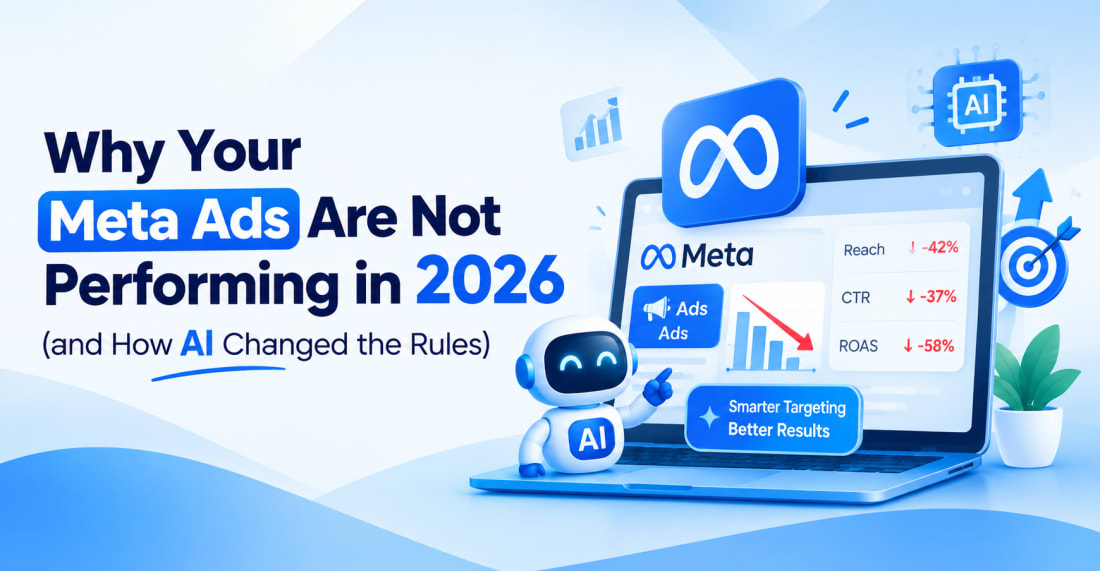
Why Your Meta Ads Are Not Performing in 2026 (and How AI Changed the Rules)
Published on
Key Takeaways
- The big shift: Meta now uses AI to decide who sees your ad, and it reads your creative to do it. Your pictures, videos and words have become your targeting.
- The cause: ads that look the same, targeting that is too narrow, weak conversion tracking, a landing page that does not match the ad, and slow follow-up.
- The local twist: many Indian buyers would rather call or WhatsApp you than fill a form, while UK buyers look harder for trust signals and clear data consent.
- The fix: repair tracking and the page first, then feed the system a few genuinely different ideas each week, and judge success by cost per qualified lead.
Spending on Meta ads but not getting enquiries?
BizzBuzz Creations reviews your account, finds the leaks and builds paid campaigns that bring in people who are ready to talk.
Get a free ad auditLet us start with something honest. If your Facebook and Instagram ads worked well last year and now feel flat, you are not doing everything wrong, and you are not alone. We hear the same story from business owners almost every week: “Same budget, same product, and suddenly the leads dried up.”
Usually the budget is not the problem. The way Meta decides who sees your ad has changed, and many of us are still running campaigns the old way. This guide walks through what changed, why it hurts, and what to do about it, in plain language, so you can get leads with paid ads again without burning through your budget.
What changed on Meta (in simple words)
A few years ago, you picked an audience by hand. You chose an age range, a few interests, maybe a lookalike group, and Meta showed your ad to them. You were the one steering.
Today, Meta leans heavily on AI systems. One of them, often called Andromeda, helps pick a short list of ads for each person from a huge pool every time they open the app. It looks at the content of your ad itself, the image, the video, the first line, and works out who might care. Meta also nudges advertisers towards broad targeting and its automated Advantage+ campaigns, a big change in how online advertising works as a whole.
What does that mean for you? Your creative is now doing the job your targeting used to do. If your ads all say the same thing in the same way, the system has very little to work with. A note of caution: a lot of the numbers floating around online about this come from agencies and tool sellers, so treat percentages as rough signals and test things on your own account.
The most common reasons Meta ads stop performing
1. The ads all look alike
Picture five ads with the same photo, the same offer and slightly different headlines. To a person scrolling, that is one ad. To the AI, it is also one idea. Real variety means different angles: a customer story, a short video that explains a problem, a before-and-after, an honest answer to a common worry. Ask yourself, “If I showed these side by side, would a stranger say they are different ads?”
2. Targeting is too tight
Stacking interests, layering exclusions and aiming at a tiny audience used to feel smart. Now it can starve the system of room to learn. Many advertisers do better by testing broader audiences and letting strong creative find the right people. You can still guide things with a clear offer and a clear message.
3. Tracking is broken (so everyone is guessing)
Meta’s AI learns from the results you send back. If your Pixel or Conversions API is missing, double counting or only tracking page views, the system is learning from bad information. Check that real enquiries, calls or purchases are being recorded properly before you change anything else.
4. The page lets the ad down
The ad promises a free consultation, and the page opens with a long company story. The ad shows one product, and the page shows twenty. On a phone, the page takes six seconds to load. People leave, and no ad can fix that. Match the first screen of your page to the exact promise in the ad, keep forms short, and test it on a mid-range phone with ordinary mobile data.
5. Nobody replies fast enough
This is the quiet leak in any lead generation effort. Someone fills your form at 8 pm, and the first reply comes two days later. By then they have spoken to three other businesses. Whether the lead arrives by form, call or WhatsApp, a quick and friendly first response often matters more than a clever ad.
6. You keep changing things
We understand the urge. A bad day of results and you edit the budget, the audience and the ad all at once. But frequent edits can reset what the system has learned. Give each change a few days, and change one thing at a time so you know what actually helped.
Using AI the human way
The same technology that changed the rules can also help you keep up, as long as you stay in charge of the thinking.
- Brainstorm angles, not just wording. Ask an AI assistant for ten different reasons someone might buy from you, or ten worries they might have. Pick the best, then make each one properly.
- Draft, then humanise. Let AI suggest opening lines, then rewrite them in the way you actually talk to customers.
- Read your own data. Export your results and ask AI to point out patterns in which hooks and formats earn the cheapest qualified leads.
- Keep real people in the frame. Real faces, real customer words and real results still stand out in a feed full of generic AI-made images.
A simple weekly routine that works
- Monday: look at last week by ad, not just by campaign. Pause clear losers.
- Tuesday: note what is working and brainstorm two or three new angles.
- Wednesday: make and launch a few genuinely different ads.
- Thursday to Sunday: leave it alone, answer every lead quickly and write down what people ask.
Then repeat. Think of creative as a habit, not a one-time launch.
When it makes sense to hire a paid marketing agency
Plenty of business owners can fix a few of the issues above on their own, and we would encourage you to try. But there is a point where the time you spend inside Ads Manager costs more than the help would. If you are running the business all day and fixing campaigns at midnight, that is usually the sign.
That is where it can help to hire a paid marketing agency that will look at the whole journey, not just the ad: the creative, the tracking, the landing page and the follow-up. At BizzBuzz Creations, we start by reading your account the way a new team member would, then tell you plainly what is working and what is not. You can see how we approach it on our paid marketing services page, or simply talk to us if you would rather ask a person.
The aim is simple: increase sales with online advertising in a way you can actually measure, not just count reach and clicks. If a campaign cannot be tied to enquiries, calls or orders, we would rather fix it than keep spending on it.
What about paid marketing services pricing?
This is the question everyone asks first, and fair enough. Paid marketing services pricing usually has two parts: the money that goes to Meta or Google for the ads themselves, and the fee for the team that plans, builds and improves the campaigns. The second part depends on how many platforms you use, how much creative you need and how hands-on you want us to be. Because every business is different, we prefer to look at your goals before giving a number. Send us a message and we will give you a clear, honest quote with no pressure.
Final thoughts
Meta ads have not stopped working. They have changed. The businesses doing well now keep their tracking clean, give the AI plenty of different ideas, respect how their audience prefers to talk, and reply to every lead like a real person. Start with the checklist above, fix one leak at a time, and measure by cost per qualified lead, not by clicks. If you would like a hand, get in touch with BizzBuzz Creations and we will help you turn your ad spend into real conversations.
Ready to turn clicks into customers?
BizzBuzz Creations audits your campaigns, fixes the leaks and builds paid marketing that brings in people ready to buy.
Get a free ad auditFrequently Asked Questions
Written by
KHUSHI GUPTA
Expertise in SEO, digital marketing, content strategy, and online growth, with a focus on practical, research-driven strategies that help businesses improve visibility and generate meaningful results.