
Why Businesses Fail to Get Leads From Digital Marketing (And How to Fix It)
Published on
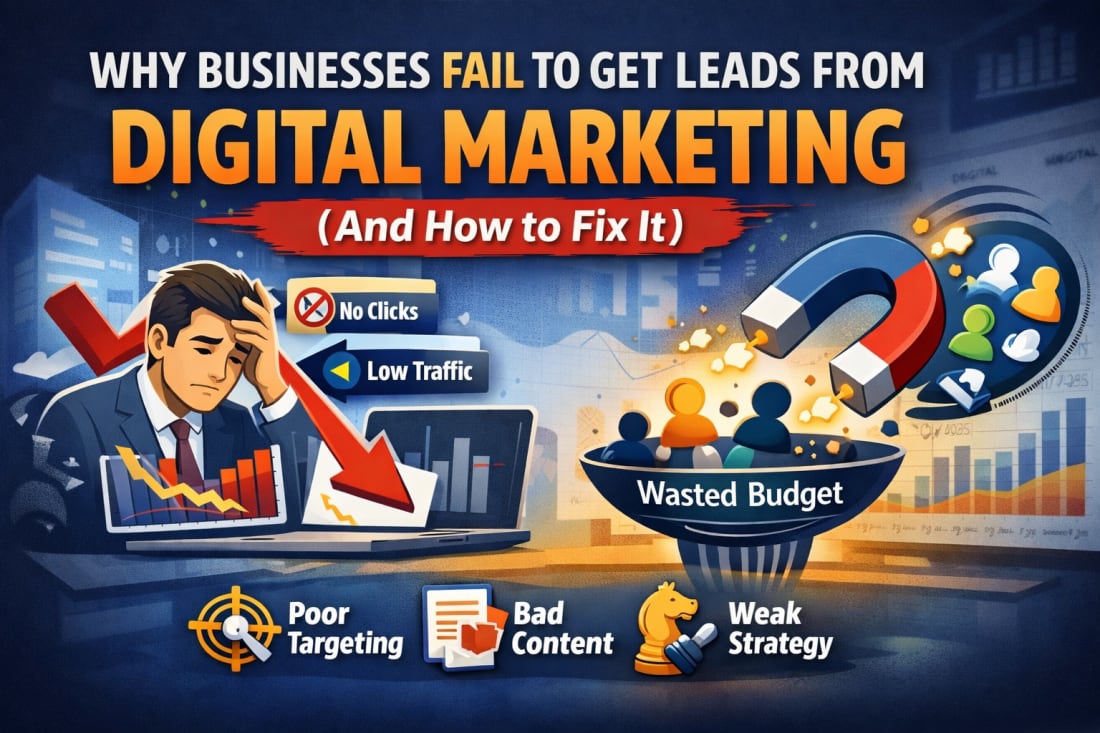
If you are a business owner and feel that digital marketing is not working, you are not alone.
Many businesses invest money in SEO, social media, or ads but still struggle with low leads, poor enquiries, or zero ROI. The problem is not digital marketing itself — the problem is how it is planned, executed, and aligned with your business reality.
This pillar guide explains why businesses fail to get leads from digital marketing and what actually works in 2025, based on real business pain points.
1. You Are Doing Marketing Without a Clear Business Goal
One of the biggest mistakes businesses make is starting digital marketing without defining what success looks like.
Common situations:
“Just increase followers”
“Do some SEO”
“Run ads and see what happens”
Without a clear goal like lead generation, calls, enquiries, or bookings, marketing becomes random activity instead of a growth system.
What Works Instead
A successful digital marketing strategy starts with:
Clear lead goals (calls, forms, WhatsApp)
Defined target audience
One primary conversion action
Marketing should support business revenue — not vanity metrics.
2. Traffic Aa Raha Hai, But Conversion System Nahi Hai
Many business owners say:
“Website pe traffic aa raha hai, lekin enquiry nahi aa rahi.”
This happens when:
Website is informative but not persuasive
No clear call-to-action (CTA)
Slow website or poor mobile experience
Forms are long or confusing
Traffic without conversion optimisation is wasted money.
What Works Instead
Clear CTA above the fold
Simple lead forms
WhatsApp / call buttons
Landing pages designed for conversion
Digital marketing brings people — conversion systems turn them into leads.
3. You Are Targeting Everyone (So You Convert No One)
Trying to target everyone is another major reason digital marketing fails.
Examples:
Running ads for “all age groups”
Generic SEO keywords
Broad social media targeting
This leads to low-quality leads or no leads at all.
What Works Instead
Industry-specific targeting
Location-based targeting
Problem-based messaging
Marketing works best when it speaks to one specific pain point.
4. Wrong Platform, Wrong Strategy
Not every platform works for every business.
Common mismatches:
Using Instagram for manufacturing leads
Doing only SEO when business needs quick sales
Running ads without remarketing
What Works Instead
Choose platforms based on intent:
Google Ads → High-intent buyers
SEO → Long-term lead flow
Meta Ads → Awareness + lead volume
LinkedIn → B2B & manufacturing
Strategy should match buyer behaviour, not trends.
5. No Trust Signals = No Leads
Today’s customers don’t convert easily. They check:
Google reviews
Website credibility
Brand presence
Social proof
If trust is missing, leads will drop — even with high traffic.
What Works Instead
Google My Business optimisation
Reviews & testimonials
Case studies
Clear business information
Trust converts attention into enquiries.
6. Depending on Agencies Without Understanding the Strategy
Many businesses outsource digital marketing but:
Don’t know what is being done
Don’t track real KPIs
Judge success only by reports
This creates frustration and poor results.
What Works Instead
Clear monthly goals
Transparent reporting (leads, calls, cost)
Strategy-first approach, not tool-first
A good agency explains why before what.
7. Google & Digital Marketing Have Changed (But Strategies Haven’t)
Google’s latest updates focus on:
Helpful content
Real expertise
User experience
Trust & relevance
Old tactics like keyword stuffing or generic blogs no longer work.
What Works Instead
Pain-point-based content
Industry-focused strategies
Real answers to real questions
Human-first marketing
How Digital Marketing Should Actually Work in 2025
A working digital marketing system looks like this:
Identify real business problems
Choose the right platform
Build trust
Capture leads properly
Follow up fast
When these pieces align, digital marketing becomes a predictable lead engine.
Final Thought for Business Owners
If digital marketing is not giving you leads, it does not mean marketing doesn’t work.
It usually means:
Wrong strategy
Wrong execution
Wrong expectations
With the right approach, digital marketing can consistently generate high-quality leads and real business growth.
Need a Strategy That Actually Generates Leads?
At BizzBuzz Creations, we focus on problem-driven digital marketing strategies designed to generate enquiries, calls, and revenue — not just traffic.
👉 Get a customised digital marketing strategy built for your business goals.
Written by
Shreya
-Hii, I am SEO specialist skilled in optimizing websites, enhancing online visibility, and driving organic growth through strategic keyword research and content optimization.
Get Free Consultancy Now!
Ready to grow your business with trusted digital marketing services in UP? Contact Bizz Buzz Creations today and let’s build your success story together.